A Trip to Hades with Melanie Martinez
story by editor-in-chief: Ashly Nicole
Photos by Ashly Nicole
Melanie Martinez closed out the U.S. leg of her HADES: The Sacrifice Tour at the Kia Forum in Los Angeles, ending the run with a performance that stayed entirely within the world of her latest album.
There was no “Cry Baby,” no “K-12,” no “PORTALS,” and no nostalgia from past eras. For the entirety of this show and tour, Melanie remained inside HADES, performing all 18 tracks from the album and allowing its story to unfold in sequence.
This time, the story belongs to Circle, a new character who has been brought up from Hades. The album introduces a world separate from Melanie’s previous eras, exploring Circle's existence and the dystopian society surrounding her, along with themes of corruption, conformity, power, and the complicated realities of the world above and below. The concert took those ideas and gave them a physical setting.
The performance was structured much like the album itself. Visuals, narration, set transitions, and breaks between songs helped connect each chapter, giving context to Circle's journey while expanding on the world described throughout HADES. Instead of feeling like a collection of individual performances, the set was deliberately paced to tell one complete story. That attention to the narrative was especially effective because the album was performed front to back, and also gave Mel’s audience a chance to gain even more insight to her new character, Circle, as this was a lot of people’s first time meeting her.
The production became an extension of the album, giving physical form to the places and ideas Melanie has established through her music.
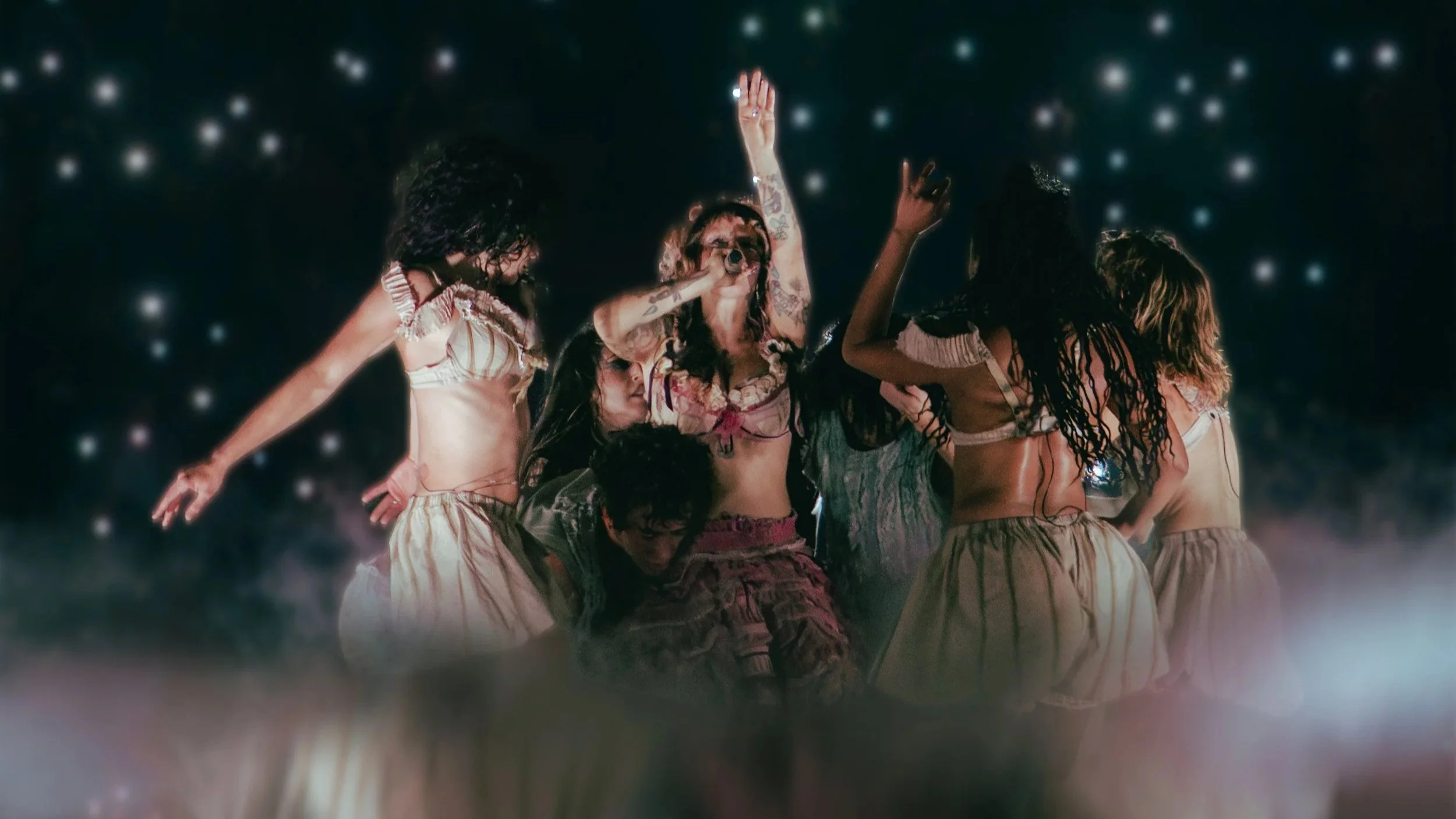
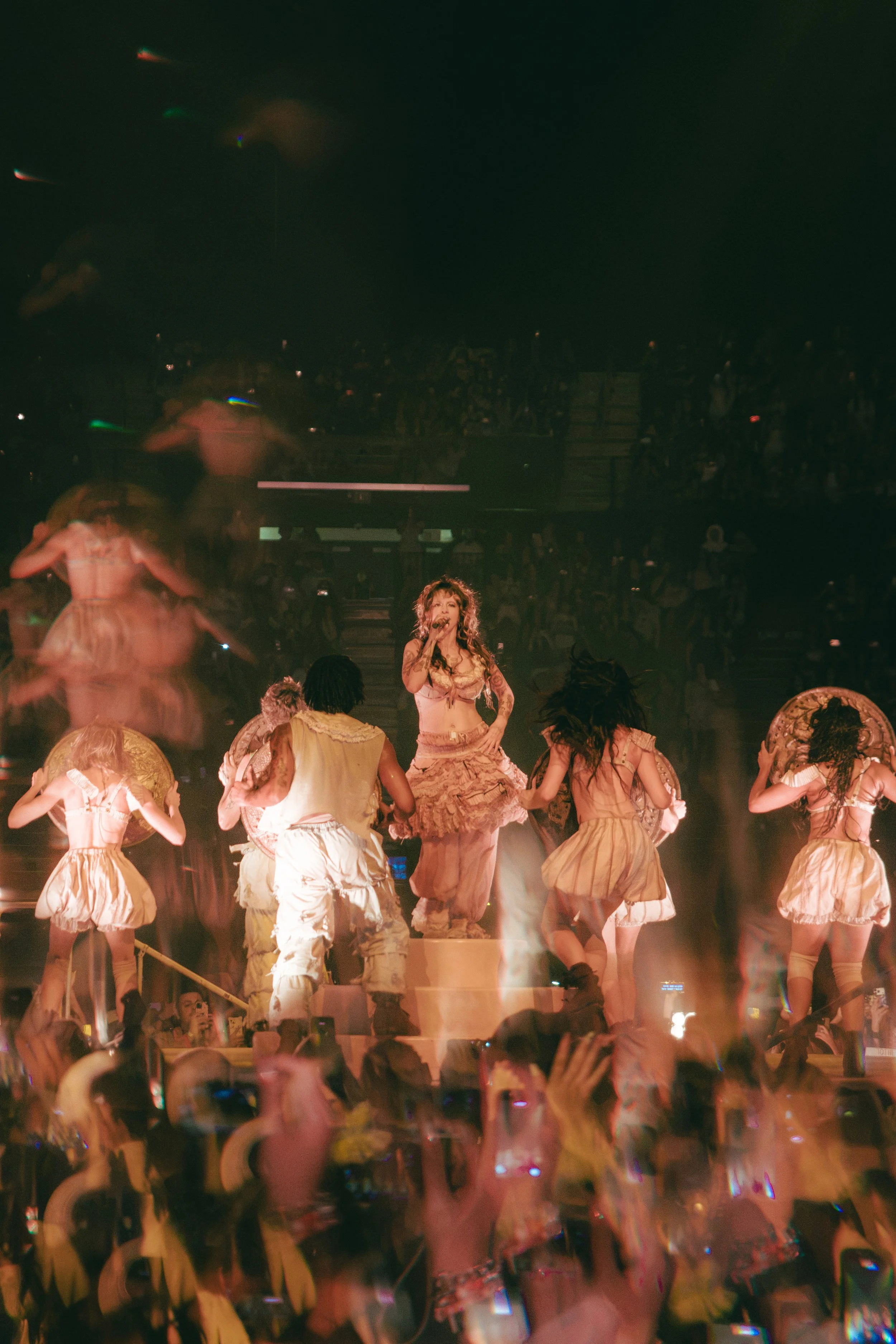
The show opened with “GARBAGE,” immediately establishing the tone of the world Melanie was about to introduce. Rather than walking onto an empty stage and just beginning the first song, Melanie was surrounded by a production designed to feel like its own environment. Large set pieces, dancers, fog, lighting, costumes, and props continuously altered the space around her, making the stage feel less like a backdrop and more like a constantly changing part of the story. That continued through “IS THIS A CULT?” and “POSSESSION,” with the production becoming increasingly more theatrical as the songs progressed. The dancers weren't simply there to fill the stage, they as they are in every performance of Mel’s were part of the world she was creating, moving around her, surrounding her, and interacting with the different environments throughout the performance.
“WHITE BOY WITH A GUN” brought another layer to the production's social commentary, while “DISNEY PRINCESS” leaned further into the exaggerated imagery and contradictions at the heart of HADES. Each song was given its own visual identity, but none felt completely detached from the larger world. Between many of the songs, Circle's narration helped move the story forward. Rather than leaving the audience to interpret the album entirely on their own, the spoken interludes provided additional pieces of Circle's perspective and connected the individual songs together.
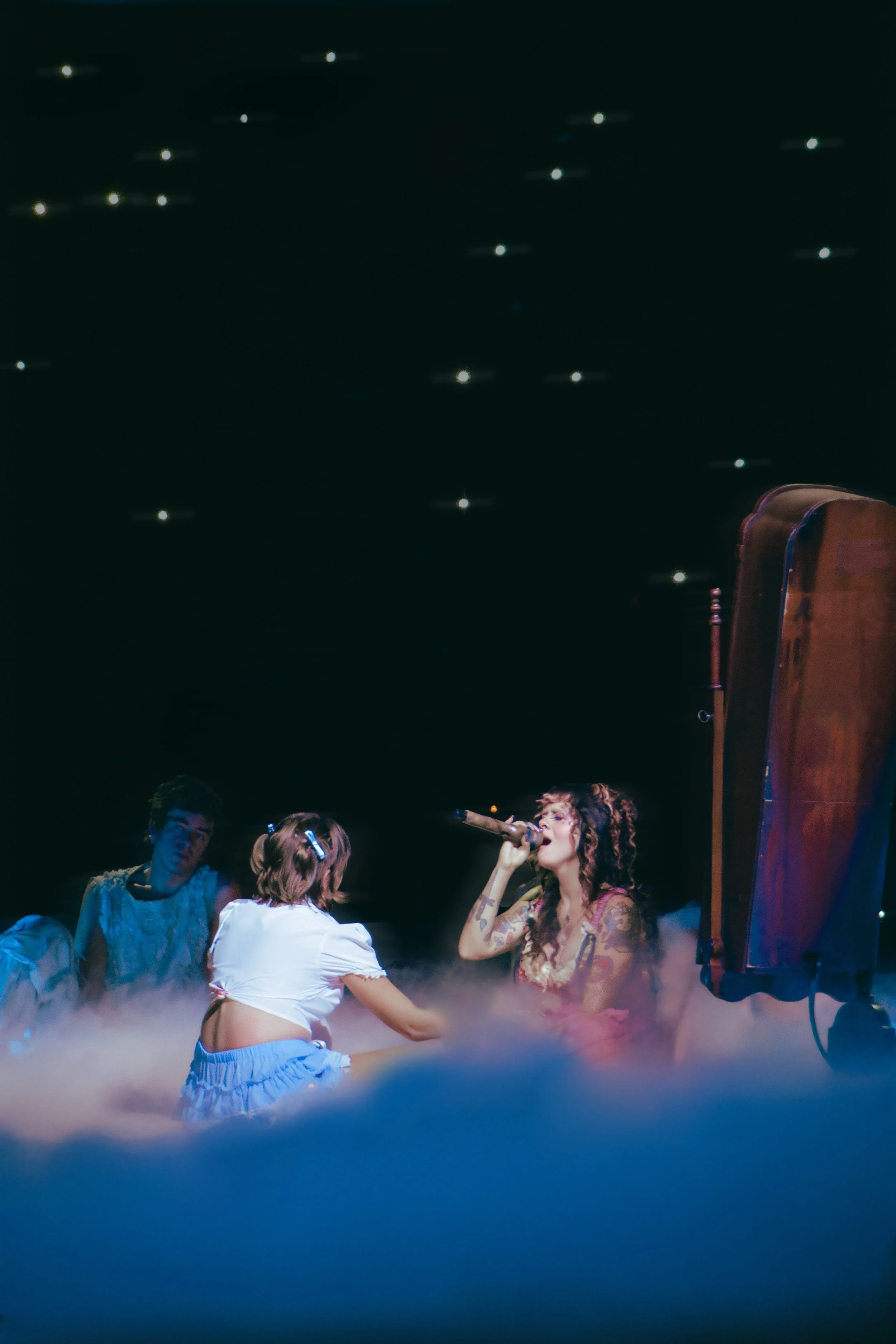
One of the biggest departures from the main stage came when Martinez made her way to the B-stage, bringing the massive production down to something much more intimate. There, she performed, “GRUDGES”, “MONOPOLY MAN” before moving into “AVOIDANT,” one of the most zoomed in and personal moments of the night. Melanie brought a fan onto the stage and sat directly across from them as she performed, creating a moment that felt completely different from the huge production happening on the main stage of the venue. With the two facing each other throughout the song, the performance became less about spectacle and more about the connection between the artist, the fan, and the music. It was a brief but powerful change of pace within a show built around an expansive story. For those few minutes, there were no elaborate set pieces competing for attention. The focus was simply on the two of them.
It was one of the night's most memorable moments precisely because of how different it felt from everything surrounding it.
“MONOLITH” then expanded that intimacy outward. As Martinez performed from the B-stage, the lights from thousands of phones throughout the Forum illuminated the stage, turning the audience into part of the visual itself. Thousands of tiny lights filled the arena while glowing orbs descended from the ceiling, creating an almost surreal atmosphere above the crowd. The audience wasn't continuing to only witness the story unfold, the crowd became another visual element within it.
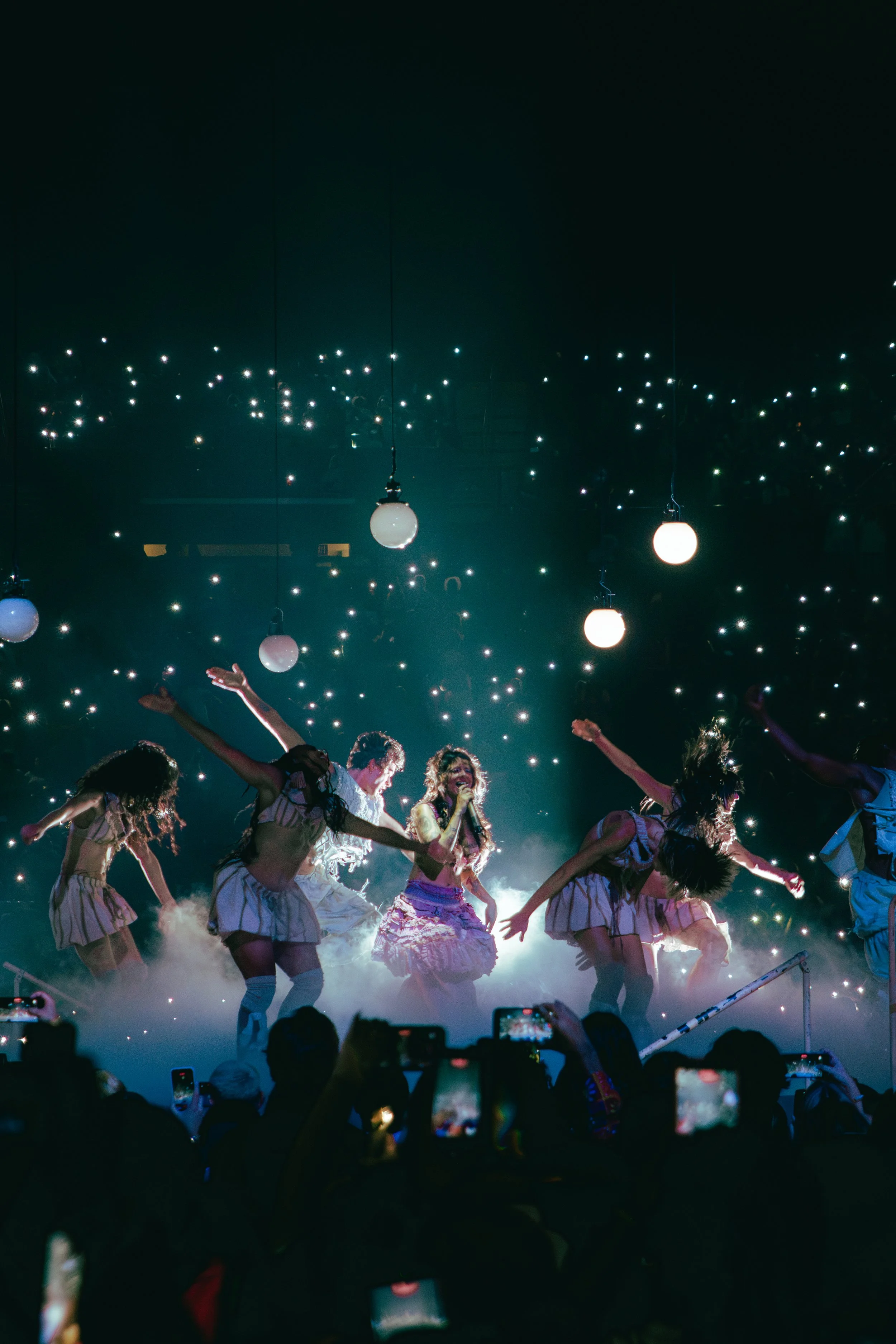
“WEIGHT WATCHERS” brought the show back toward its larger-scale theatricality before Melanie eventually returned to the A-stage for the second half of the album. From there, the performance became progressively darker and more intense. “The Plague” marked another shift in the show's energy, followed by “BATSHIT INTELLIGENCE” and “GUTTER.” The choreography became increasingly physical, while the lighting and staging continued to shift around Melanie. By this point, the production had established a rhythm of its own: Circle's narration would advance the story, the environment would change, and Mel and her dancers would inhabit whatever new chapter had just been introduced.
“UNCANNY VALLEY” and “THE VATICAN” pushed the theatrical elements even further. “THE VATICAN” in particular opened up into an extended dance sequence, giving the dancers a moment to command the stage while Martinez's world continued unfolding around them. The set design continued to shift with the music, using the stage as more than a fixed backdrop and allowing each song to create its own distinct environment. “HELL'S FRONT PORCH” brought the production to one of its most explosive points. Fire and pyro erupted across the stage throughout the performance, turning the song into a literal inferno and surrounding Melanie with bursts of fire. The effects gave the track a physical intensity that matched its title, making the stage feel dangerous and unstable as the show moved toward its conclusion.
For “CHATROOM,” the spectacle became more focused and technologically unsettling. A desk and desktop computer were brought onto the stage, with a camera built into the computer. Melanie performed directly to it while the live video feed appeared on the venue's screens, allowing the audience to watch her through the same device that framed the song's world. Instead of simply projecting a close-up of the performance, the screens made it feel as though she was communicating through the computer itself, turning the stage into a strange, oversized chatroom.
The final two songs used completely different forms of spectacle: “HELL'S FRONT PORCH” relied on fire and destruction, while “CHATROOM” reduced the set to a desk, a computer, and a Melanie and her dancers interacting with the camera in a first person view. Together, they brought the main set toward its conclusion without breaking the world of HADES. By then, the audience had spent the entire show inside the album, rather than being pulled out of the story for unrelated hits or songs from previous eras. That was arguably one of the boldest decisions of the tour.
Melanie has a catalog filled with songs that could have easily been inserted into an arena set, but she chose not to. Instead, the show committed completely to HADES. The decision gave the album room to breathe and allowed the production to function as one continuous piece rather than a collection of unrelated performances. This was also a surprising choice, considering the date for this show fell on the 11th anniversary of her debut album, Cry Baby. Many fans speculated an encore performance of a Cry Baby song, but they guessed incorrectly! After the final bows, Mel returned for “THE LAST TWO PEOPLE ON EARTH,” performing the encore and closing out the show in the center of the crowd on the b-stage.
What made the show work was the sheer amount of detail built into it. The sets continuously evolving, the dancers becoming more and more involved with Circle and the entire production itself, and of course the props that were tied to the themes of individual songs. Melanie’s narration filled in pieces of Circle's story, and the B-stage brought the production directly into the audience, which we all absolutely loved.
The production never relied on spectacle simply for spectacle's sake. At its best, the visuals gave the album's ideas a physical form, and that is ultimately what made HADES: THE SACRIFICE feel so different from Mel’s previous eras. This wasn't an extension of Cry Baby's story or another chapter of the PORTALS mythology. It was the introduction of Circle and an entirely new world, and Melanie treated it accordingly.
This final U.S. show wasn't a retrospective, it wasn't a greatest-hits performance, it was HADES, from “GARBAGE” through “THE LAST TWO PEOPLE ON EARTH,” performed as one continuous experience.
For an artist like Melanie, whose music has always been closely tied to visual storytelling, HADES: THE SACRIFICE proved that she is still willing to build an entirely new world and ask her audience to step inside it, and I think that’s what will forever draw people to her and her music. We wish we could relive this show again and again, but if you’re across the pond and haven’t been to a Melanie show before, I recommend diving into this new era of hers, it’s such a unique world, bringing to light relatable and real world issues in a mythological realm.
Make it stand out
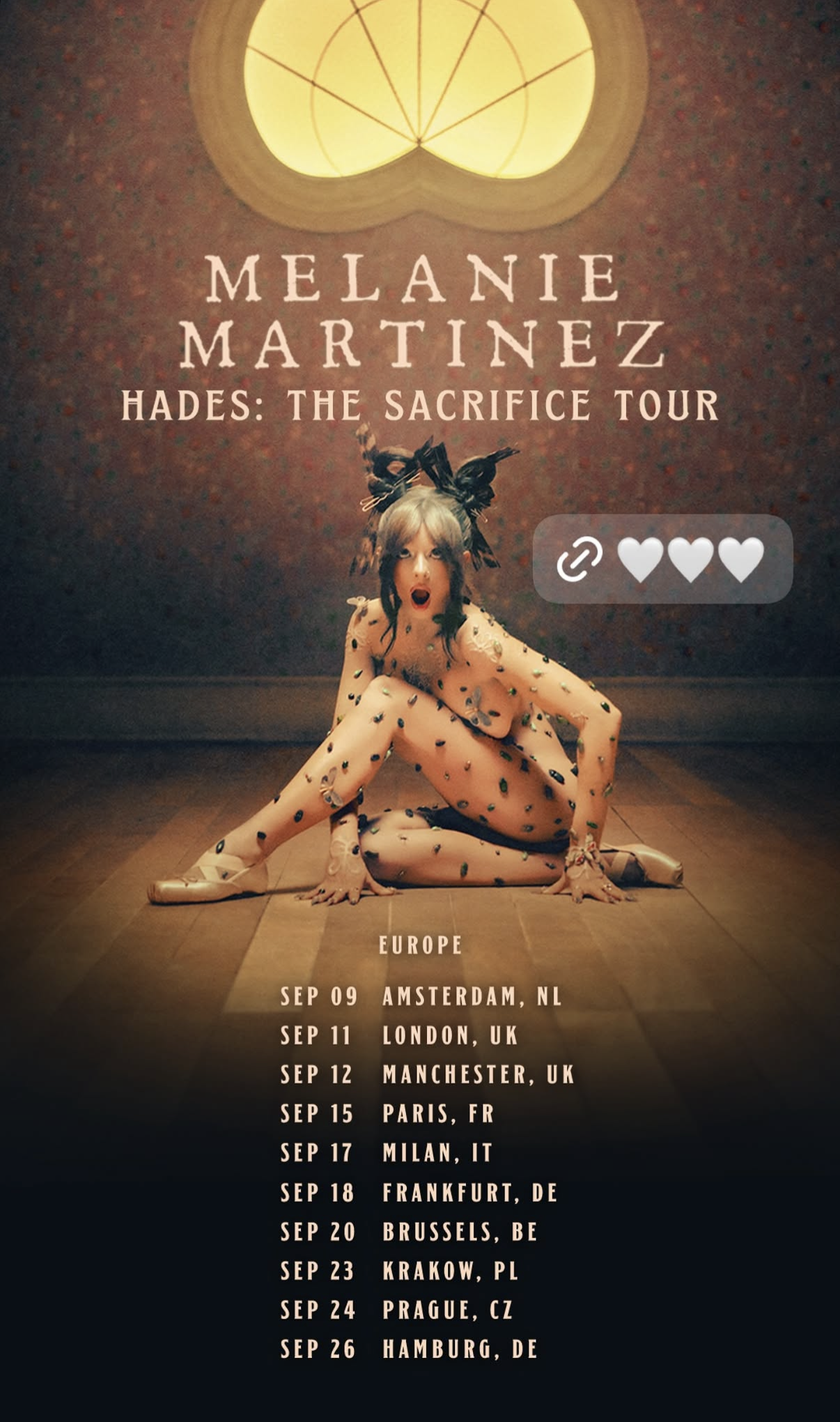
Melanie’s current upcoming tour dates
buy tickets here